Introduction: The High-Tech Freeze
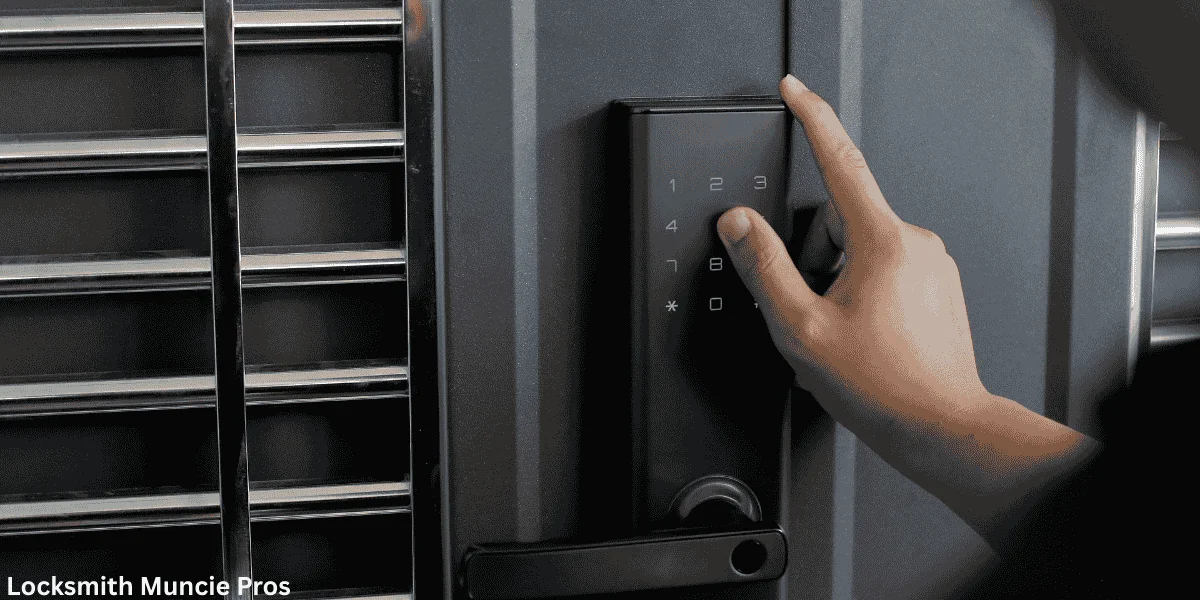
It’s a scene becoming more common across Muncie, from the historic porches of the Old West End to the modern subdivisions near Yorktown. You arrive home after a long shift at IU Health Ball Memorial or a freezing afternoon at a Ball State basketball game. The wind is whipping off the White River, the temperature has plummeted to a bone-chilling 12°F, and you reach out to tap your code into your sleek, high-tech smart lock.
Instead of the reassuring thunk of the deadbolt retracting, you hear a high-pitched, strained mechanical whine. Or worse—nothing at all. The screen stays dark. The motor stays silent. You are standing on your own porch, staring at a piece of cutting-edge technology that has been defeated by a classic Indiana January.
As we move into 2026, smart locks have become a staple of Muncie home security. They offer incredible convenience, allowing us to let in dog walkers, check on our kids, and go keyless. However, these devices are essentially small computers living on the outside of your door. In Delaware County, where we experience “flash freezes” and the occasional “Polar Vortex,” a smart lock that hasn’t been winter-proofed is a lockout waiting to happen. This guide will ensure your high-tech home stays accessible even when the mercury disappears from the thermometer.
Why Electronics and Indiana Winters Don’t Mix
To understand why your smart lock is struggling, we have to look at what’s happening inside the unit when the Indiana frost settles in. A smart lock is a delicate balance of three things: battery chemistry, motor torque, and physical alignment. In a Muncie January, all three are under attack.
The Science of Battery Sluggishness
Most people don’t realize that batteries don’t actually “store” electricity; they store a chemical reaction that produces electricity. In the Midwest, cold is the enemy of chemistry. When the temperature drops below freezing, the internal resistance of a standard battery increases. This means the ions move slower, and the battery’s ability to provide a “burst” of power—the kind needed to turn a heavy metal deadbolt—is severely compromised. A battery that worked perfectly in October at 60°F might only provide half its rated power at 10°F.
The “Thickened Grease” Problem
Inside your smart lock is a series of tiny plastic or metal gears driven by a small electric motor. To keep these gears moving smoothly, manufacturers use a thin layer of lubricant. However, many “big-box store” smart locks use grease that wasn’t designed for sub-zero temperatures. In the middle of an Indiana winter, this lubricant can thicken to the consistency of cold honey. Your motor, already weakened by a cold battery, now has to fight through “sludge” just to move the bolt.
The “Double Whammy” Effect
This is where most Muncie homeowners get stuck. The cold weakens the battery (less power) while simultaneously thickening the grease and shrinking the metal components (more resistance). This “Double Whammy” is why your lock might work fine at noon when the sun is out, but fail completely at 11:00 PM when the temperature hits its daily low. Understanding this cycle is the first step to preventing a January emergency.
Tip #1: The Lithium Power Move (The Battery Secret)
If you take only one piece of advice from this guide, let it be this: Throw away your alkaline batteries.
Most smart locks (Schlage, Yale, Kwikset) come out of the box with standard alkaline batteries (like the ones you put in a TV remote). For a Muncie resident, these are a liability. Alkaline batteries are water-based. When it gets cold, that water-based chemistry slows down, and the voltage “sags.”
Why Lithium is King in Delaware County
Lithium batteries (like the Energizer Ultimate Lithium) are designed with a completely different internal chemistry. They do not contain water and are rated to perform in temperatures as low as -40°F.
- Consistent Voltage: While an alkaline battery’s power drops off a cliff as it gets colder, lithium maintains a steady, high voltage until the very end of its life.
- Leak Protection: We’ve all seen the “white crust” of a leaked alkaline battery. In winter, as metals contract and expand, alkaline seals are more likely to fail. Lithium batteries are leak-resistant, protecting the $250 circuit board inside your lock.
- Longevity: In a typical Muncie smart lock, a set of lithium batteries can last twice as long as alkaline, meaning you aren’t stuck changing them in a snowstorm.
The “Low Battery” Warning Trap
Many smart locks are programmed to give you a “Low Battery” alert via an app or a flashing red light. However, these sensors are often calibrated for room-temperature conditions. In an Indiana winter, a battery can go from “80% Charged” to “Dead” in a single night if a sudden freeze hits. My professional recommendation for Muncie homeowners? Don’t wait for the warning. Make it a habit to install a fresh set of Lithium batteries every November 1st, right alongside your smoke detector check.
Tip #2: The “Analog” Backup Strategy
In the world of home security, “redundancy” is the word of the month. Relying 100% on a digital connection when the wind chill in Delaware County hits -15°F is a gamble. If your smart lock features a hidden keyway behind a decorative faceplate, now is the time to find that physical key and ensure it’s accessible.
The Neighbor Network: The Muncie Advantage
One of the best things about living in a community like Muncie is our “neighbor-helping-neighbor” spirit. While smart locks were designed to eliminate the need for “hiding a key,” the Indiana winter creates a loophole where a physical key is your only guaranteed entry.
- The Strategy: Give a physical backup key to a trusted neighbor in your immediate area. If your phone dies in the cold or your keypad freezes over, a 30-second walk to a neighbor’s warm house is much better than a two-hour wait for an emergency locksmith in the snow.
Safe “Hidden” Spots (That Aren’t Obvious)
If you don’t have a nearby neighbor you trust with a key, you must get creative. Burglars in Muncie know all the standard tricks—they check under the doormat, inside the plastic “fake rock,” and on top of the door frame.
- The “Plain Sight” Strategy: Consider a weather-proof combination lockbox. However, don’t mount it right next to the front door. Bolt it to a sturdy, less obvious location like a rear fence post or a discreet spot behind your garage.
- The “Magnetic” Vehicle Backup: A magnetic key hider placed high up in the wheel well of a vehicle parked in your driveway can serve as a “last resort” access point that most burglars won’t spend time searching for in the cold.
Tip #3: Alignment and “The Friction Factor”
When you lock a door manually, you can feel if the bolt is “rubbing” or if you have to pull the handle slightly to get the click. You subconsciously adjust for the door’s “mood.” Your smart lock’s motor, however, is not that intuitive. It simply tries to shove the bolt into the hole.
How Indiana Humidity Shifts Your Entryway
Muncie’s transition from a damp December to a dry, freezing January causes significant movement in building materials.
- Wood Contraction: Your wooden door and frame will shrink as the furnace runs and the outdoor air dries out. This can move the strike plate just a few millimeters out of alignment.
- The Symptoms of Motor Strain: If you hear your smart lock “cycling” twice (trying to lock, failing, and trying again) or if you hear a grinding noise, your motor is under extreme friction. In the summer, a strong battery can fight through this. In January, that friction will cause a cold battery to fail instantly.
The “Five-Minute Fix”: Adjusting the Strike Plate
You don’t need to be a carpenter to fix this.
- The Lipstick Test: Rub a little lipstick or a dry-erase marker on the end of your deadbolt. Extend and retract it against the frame to see exactly where it is hitting.
- Move the Plate: Often, you only need to unscrew the metal strike plate on the door jamb and shift it a fraction of an inch.
- The 3-Inch Screw Upgrade: While you’re adjusting the plate, replace those tiny 1-inch screws with 3-inch hardened steel screws. This doesn’t just help with alignment; it anchors the door deep into the wall studs, making it nearly impossible for someone to “kick in” your door—a common security concern in higher-crime areas of Muncie.
Emergency Recovery: What to Do if You’re Locked Out Right Now
If you’re reading this while standing in the snow on McGalliard Road or Riverside, here is your immediate triage plan:
- The 9V Jumpstart: Many keyless locks (like the Yale Assure or various “deadbolt-less” models) have two small metal contact points on the bottom of the exterior unit. If you touch a 9V battery to these leads, it provides enough temporary power to the keypad so you can enter your code and get inside.
- The Hand Warmer Trick: If the touchscreen is unresponsive due to a layer of frost, pressing a chemical hand warmer (or even a warm cup of coffee) against the sensor for 60 seconds can often “wake up” the electronics.
- Check the “Man Door”: Many Muncie homes have a side door through the garage or a back laundry room door. Often, these are older, manual locks that are less likely to be affected by electronic failure.
Selecting the Right Smart Lock for the Midwest
If you are currently shopping for a smart lock at the Muncie Lowes or Menards, or browsing online, you need to look past the sleek design and focus on the “environmental specs.” Not all smart locks are created equal, and some are clearly designed for California weather, not an Indiana winter.
The “IP” Rating: Your First Line of Defense
When looking at a lock’s box, look for the IP (Ingress Protection) rating.
- IP54: This is the bare minimum. It protects against dust and light splashes of water.
- IP65 or Higher: This is what we recommend for Muncie. It ensures the unit is “dust-tight” and protected against the driving freezing rain and sleet common in Delaware County.
Touchscreens vs. Physical Buttons
In the locksmith industry, we see a clear trend in January: Physical buttons often outperform touchscreens. * The “Glove” Factor: If it’s -5°F outside, you don’t want to take off your heavy gloves to type a code. Capacitive touchscreens (like on your smartphone) often won’t register through thick fabric.
- The “Ice Layer” Problem: A thin film of “black ice” can form over a glass touchscreen, rendering it useless. Physical, tactile buttons can be pressed even if there is a bit of frost on them.
Top Recommendations for Muncie Homes in 2026
Based on performance during the last few “Polar Vortex” events, here are three models that consistently stand up to the cold:
- Schlage Encode Plus: This is a “Grade 1” commercial-strength lock. It has a massive motor with high torque, meaning it can often “push” through a slight frost jam that would stop other locks.
- Yale Assure Lock 2: Known for its versatility, it features external 9V battery terminals. If the internal batteries die in the cold, you can “jumpstart” it from the outside without a key.
- August Wi-Fi Smart Lock (Retrofit): Because the “smart” part of this lock stays inside your house where it’s warm, and it uses your existing deadbolt hardware on the outside, it is less prone to external electronic failure.
Professional Winter-Proofing Services
You wouldn’t head into an Indiana winter without checking your car’s antifreeze or your home’s furnace. Your locks deserve the same “seasonal service.” While DIY maintenance is great, a professional locksmith brings tools and knowledge that go deeper than a can of graphite.
The Smart Lock “Tune-Up” Checklist
When you call Locksmith Muncie Pros for a winter-proofing visit, we don’t just spray some lubricant and leave. Our professional audit includes:
- Terminal Cleaning: We check for “micro-corrosion” on battery contacts that can cause power failure in cold weather.
- Torque Testing: We ensure the motor isn’t working harder than it has to by precision-aligning the bolt with the strike plate.
- Firmware Updates: Many smart lock “glitches” in cold weather are actually software bugs. we ensure your lock is running the latest, most efficient code.
- Strike Plate Reinforcement: We replace standard screws with 3-inch hardened steel to protect against both the weather and “kick-in” burglaries.
Is It Worth the Cost?
A professional “Winter-Ready” service call usually costs less than half of what an emergency “After-Hours Lockout” call costs. Think of it as insurance for your peace of mind.
Conclusion: Smart Tech, Smarter Preparation
Smart locks are an incredible addition to any Muncie home. They offer freedom, tracking, and convenience that traditional keys simply can’t match. But in the Midwest, “smart” must be paired with “prepared.”
By switching to Lithium batteries every November, keeping a physical backup key with a neighbor, and ensuring your door alignment is perfect, you can enjoy your high-tech security without ever fearing the “Big Freeze.”
Don’t let a $5 battery or a 2-millimeter misalignment leave you stranded in the Indiana snow this January. Take control of your home’s security today.
Call Muncie’s Smart Lock Experts
Is your smart lock making a strange noise? Is the keypad acting sluggish as the temperature drops? Don’t wait for the next snowstorm to find out if your lock will hold up.
Locksmith Muncie Pros specializes in the installation, repair, and winter-proofing of all major smart lock brands. Whether you’re a Ball State student in a rental or a homeowner in Kenmore, we are here to keep you safe and warm.
Contact us today at +1 877-311-8951 to schedule your January Security Audit!